
The Indus Valley Civilisation: Part 1
The Indus Valley Civilisation: A Bronze Age Marvel
The Indus Valley Civilisation, flourishing from 3300 BCE to 1300 BCE with its mature phase spanning 2600 BCE to 1900 BCE, represents one of humanity's earliest and most sophisticated urban cultures. Alongside ancient Egypt and Mesopotamia, it formed part of the triad of early civilisations, yet surpassed them in geographical extent. This remarkable Bronze Age culture emerged in the northwestern regions of South Asia, spreading across an area ranging from much of present-day Pakistan to northeast Afghanistan and northwestern India. The civilisation's sites span between 680,000 to 800,000 square kilometres, making it the most widespread of the three ancient civilisations. Its discovery and subsequent archaeological investigations have revolutionised our understanding of early urban development, revealing a society with remarkable achievements in city planning, architecture, crafts, and social organisation. The name derives from its discovery along the Indus River valley, though the civilisation extended far beyond this region, encompassing diverse ecological zones and cultural landscapes that contributed to its unique character and enduring legacy.
Debating Origins: Three Theoretical Perspectives
The origin of the Indus Valley Civilisation has sparked intense scholarly debate, with historians proposing three principal theories, each offering distinct explanations for how this sophisticated urban culture emerged. These debates reflect broader questions about cultural development, migration, and indigenous evolution in ancient societies.
Aryan Theory
Proponents: SR Roy, TR Ramachandran, KV Shastri
This theory proposed that the Indus Valley Civilisation was developed by Aryans, the same people associated with Vedic culture. However, this view has been largely refuted due to fundamental contrasts between IVC and Vedic culture in material remains, settlement patterns, religious practices, and technological traditions.
Diffusionist Theory
Proponents: Mortimer Wheeler, DH Gordon, EJH Mackay
This theory suggested that city dwellers from Mesopotamia or Sumeria migrated and developed the IVC. Wheeler proposed migration of ideas rather than people, arguing that the concept of civilisation diffused from West Asia. However, fundamental differences in scripts, town planning, canal systems, and religious structures between the two civilisations weakened this argument.
Indigenous Origin Theory
Proponents: A. Ghosh, M.R. Mughal, Fairservis
The most widely accepted theory proposes that the IVC evolved from settled farming cultures that gradually developed into urban centres. Pre-Harappan sites like Mehrgarh and Kili Gul Muhammad show evidence of this cultural evolution. This theory emphasises continuity and gradual transformation rather than external influence.
The Indigenous Evolution: From Villages to Cities
The most compelling account of the Indus Valley Civilisation's origins traces its roots to the emergence of settled farming communities in Baluchistan during the 7th millennium BCE. This indigenous evolution theory, championed by archaeologists like Amalananda Ghosh and M.R. Mughal, presents the Harappan culture as the culmination of a long process of cultural development rather than a sudden appearance or external imposition. The story begins with pre-Harappan sites such as Mehrgarh and Kili Gul Muhammad, where early agricultural communities cultivated wheat, barley, and cotton whilst living in modest mud houses. These settlements represent the formative phase, characterised by fewer settlements and simpler material culture, yet already demonstrating crucial innovations in farming, animal domestication, and craft production.
Amalananda Ghosh's groundbreaking work identified similarities between the pre-Harappan Sothi culture of Rajasthan and mature Harappan pottery, leading him to describe the Sothi culture as proto-Harappan. Though his analysis was later criticised for overemphasising ceramic similarities whilst ignoring other material differences, it established the foundation for understanding cultural continuity. M.R. Mughal's comprehensive analysis compared pottery, stone tools, metal artefacts, and architecture from pre-Harappan and mature Harappan levels, exploring the relationship between these phases. He argued persuasively that the 'pre-Harappan' phase represented the early, formative stage of Harappan culture, suggesting the term 'early Harappan' more accurately captured this developmental sequence. This perspective transformed archaeological understanding, replacing notions of sudden civilisational appearance with recognition of gradual, indigenous cultural evolution spanning millennia.
Early Harappan Phase: Foundations of Urban Culture
The Early Harappan phase (c. 3200–2600 BCE) witnessed the emergence of features that would characterise the mature civilisation, though without the large cities and intensive craft specialisation of the later period. This formative phase, identified at numerous sites including Balakot, Nal, Amri, Kot Diji, Mehrgarh, Nausharo, Kalibangan, Rakhigarhi, and Dholavira, demonstrates remarkable sophistication in several domains.
Technological Achievements
Large fortified settlements emerged across the region
High expertise in specialised crafts including stone working, metal crafting, and bead making
Use of wheeled transport for goods movement
Extensive trade networks connecting distant regions
Access to diverse raw materials similar to mature Harappan phase
Cultural Developments
Early forms of Harappan script appearing at sites like Padri, Kalibangan, and Dholavira
Emergence of the 'horned deity' motif across multiple sites
Evidence of social stratification through jewellery hoards
Seals suggesting trader or elite groups at Kunal and Nausharo
Process of 'cultural convergence' creating regional uniformity
What distinguishes the Early Harappan phase is the visible transition from diverse regional traditions towards cultural uniformity—a process archaeologists term 'cultural convergence'. The discovery of symbols similar to Harappan writing at multiple early sites demonstrates that the script's roots extended deep into this formative period. Similarly, the appearance of the 'horned deity' painted on jars at Kot Diji and Rehman Dheri, and incised on terracotta at Kalibangan, suggests religious and symbolic convergence accompanying material culture standardisation. Hoards of jewellery, including silver pieces found at Kunal, indicate considerable wealth concentration and hint at emerging political hierarchies, though the precise nature of early Harappan social organisation remains debated amongst scholars.
The Transition to Urban Life: Catalysts for Change
The transformation from the proto-urban Early Harappan phase to the full-fledged cities of the mature Harappan period represents one of ancient history's most fascinating transitions. What catalysts drove this remarkable change? Scholars have proposed various factors, though the precise mechanisms remain subjects of ongoing debate due to the challenges of deducing social and political changes from archaeological data alone.
Craft Specialisation
According to Chakrabarti, increasing craft specialisation, particularly the development of copper metallurgy in Rajasthan, may have served as a crucial catalyst. The technological advances in metalworking could have stimulated trade networks and economic complexity necessary for urban development.
Agricultural Innovation
The spread of settlements in the active floodplain of the Indus may have been facilitated by agricultural growth based on organised irrigation systems. Though direct archaeological evidence of such systems remains elusive, the fertility of the floodplains would have supported larger populations and surplus production.
Political Leadership
The emergence of new, decisive political leadership and significant changes in social organisation may have provided the institutional framework necessary for urban coordination. However, the nature of Harappan political structures remains one of the civilisation's most enigmatic aspects.
Environmental Factors
Favourable environmental conditions including fertile plains, adequate rainfall, and water availability created the ecological foundation for dense settlement. Population growth and the gradual spread of settlements would have required increasingly sophisticated organisational structures.
Regional Integration
The integration and unification of regional cultural patterns—including Kulli culture, Nal culture, and Kot Diji culture—created a shared cultural framework that facilitated urban development across vast geographical distances.
While trade with Mesopotamia has been suggested as a significant factor, its importance may have been exaggerated. The answer likely lies in a complex interaction of these factors rather than any single cause, creating conditions that enabled one of humanity's earliest urban civilisations to flourish across the northwestern Indian subcontinent.
Chronology and Dating: Establishing the Timeline
Establishing accurate dates for the Indus Valley Civilisation proved challenging for early archaeologists, leading to evolving chronologies as dating methods improved. Before radiocarbon dating's advent, scholars relied on cross-referencing with Mesopotamian civilisation, whose chronology was better established due to written records. John Marshall initially suggested the Harappan civilisation flourished between approximately 3250 and 2750 BCE. When Mesopotamian chronology underwent revision, Harappan dates were adjusted to approximately 2350–2000/1900 BCE, reflecting the interdependence of early dating schemes.
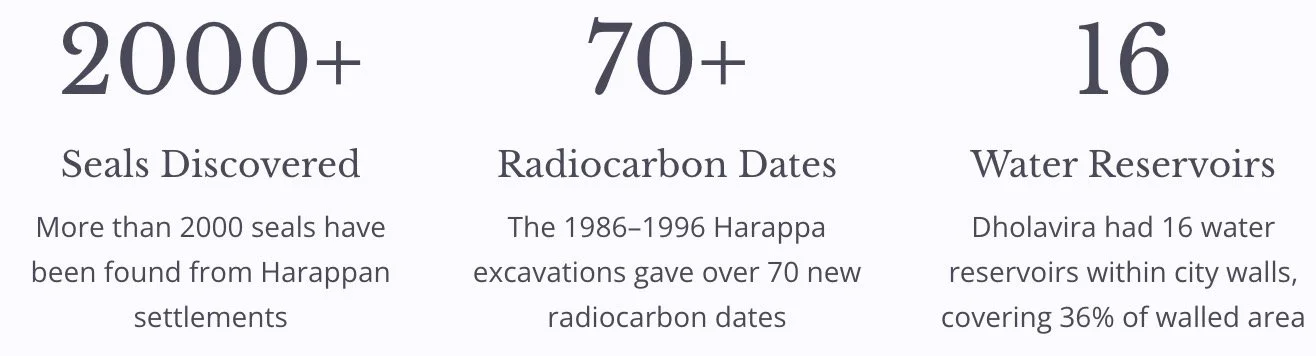
The introduction of radiocarbon dating in the 1950s revolutionised archaeological dating, offering more scientific chronological frameworks. The 1986–1996 Harappa excavations yielded over seventy new radiocarbon dates, though none from the earliest levels, which remain submerged underwater. D.P. Agrawal proposed dates of approximately 2300–2000 BCE for nuclear regions and approximately 2000–1700 BCE for peripheral zones, though these figures were based on uncalibrated radiocarbon measurements. Recent calibrated C-14 dates provide a more refined timeframe of approximately 2600–1900 BCE for the urban phase in core regions including the Indus valley, the Ghaggar-Hakra valley, and Gujarat. Interestingly, these scientifically derived dates align closely with the earlier estimates based on Mesopotamian cross-dating, validating earlier scholarly hypotheses.
Early Harappan
c. 3200–2600 BCE
Formative, proto-urban phase characterised by emerging craft specialisation and cultural convergence
Mature Harappan
c. 2600–1900 BCE
Urban phase representing full-fledged civilisation with large cities and standardised culture
Late Harappan
c. 1900–1300 BCE
Post-urban phase marked by city decline and regionalisation of cultures
Geographical Extent: A Vast Civilisational Network
The Indus Valley Civilisation's geographical extent was truly remarkable, surpassing its contemporary civilisations in territorial spread. By its mature phase, the civilisation encompassed an area larger than ancient Egypt and Mesopotamia combined, spanning approximately 1,500 kilometres along the alluvial plain of the Indus and its tributaries. This vast territory extended from Balochistan in the west to western Uttar Pradesh in the east, and from northeastern Afghanistan in the north to Gujarat state in the south, incorporating diverse ecological zones and cultural landscapes.
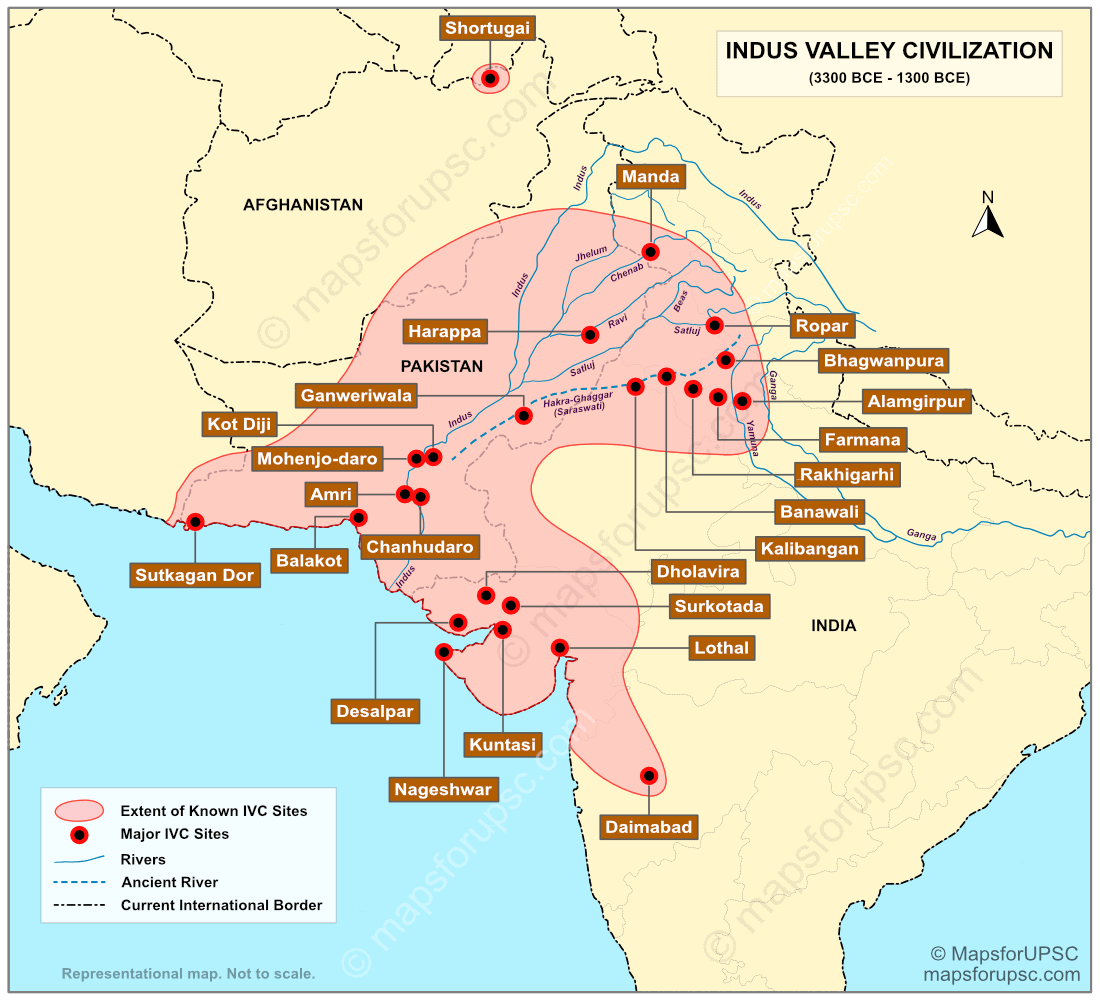
Geographical extent of indus valley Civilization
Northern Boundary
Manda (Jammu district, Jammu and Kashmir) represents the northernmost site, situated on the Beas River near Jammu.
Southern Boundary
Daimabad (Maharashtra) marks the southernmost extent of the civilisation.
Western Boundary
Sutkagen-dor on the Makran coast of Pakistan represents the westernmost site.
Eastern Boundary
Alamgirpur (Meerut district, Uttar Pradesh) marks the easternmost extent.
The distribution of sites reveals fascinating settlement patterns, with the largest concentrations in Punjab, Gujarat, Haryana, Rajasthan, Uttar Pradesh, Jammu and Kashmir, Sindh, and Balochistan. Coastal settlements extended from Sutkagan Dor in Western Baluchistan to Lothal in Gujarat, demonstrating the civilisation's maritime connections. An isolated site at Shortughai in Afghanistan, on the Oxus River, suggests far-reaching trade networks extending into Central Asia. Sites were strategically located near water sources—most often on rivers, but also on the ancient seacoast (such as Balakot) and even on islands (such as Dholavira). This geographical diversity indicates the Harappans' remarkable ability to adapt their urban model to varied environmental conditions whilst maintaining cultural coherence across vast distances, a testament to sophisticated communication and organisational systems that remain only partially understood by modern scholars.
Mature Harappan Phase: The Urban Flowering
The Mature Harappan phase (c. 2600–1900 BCE) represents the apogee of Indus Valley urban culture, characterised by large cities, standardised material culture, and extensive trade networks. According to Giosan et al. (2012), the slow southward migration of monsoons across Asia initially enabled Indus Valley villages to develop by managing the Indus floods and its tributaries. Flood-supported farming generated substantial agricultural surpluses, which in turn supported urban development. Interestingly, the Indus Valley residents did not develop irrigation capabilities comparable to Mesopotamia, relying primarily on seasonal monsoons and summer floods. Brooke further notes that advanced cities' development coincides with rainfall reduction, potentially triggering reorganisation into larger urban centres as adaptation to changing environmental conditions.
J.G. Shaffer and D.A. Lichtenstein characterise the Mature Harappan civilisation as "a fusion of the Bagor, Hakra, and Kot Diji traditions or 'ethnic groups' in the Ghaggar-Hakra valley on the borders of India and Pakistan." Maisels (2003) describes it as emerging from a "Kot Dijian/Amri-Nal synthesis," with Mohenjodaro having developmental priority alongside the Hakra-Ghaggar cluster of sites, "where Hakra wares actually precede the Kot Diji related material." By 2600 BCE, Early Harappan communities transformed into major urban centres including Harappa, Ganeriwala, Mohenjodaro, Dholavira, Kalibangan, Rakhigarhi, Rupar, and Lothal. In total, more than 1,000 settlements have been identified, primarily in the Indus and Ghaggar-Hakra regions and their tributaries. These cities displayed remarkable uniformity in material culture—from pottery styles to brick sizes—suggesting centralised planning or widespread craft specialist networks that maintained standards across vast distances.
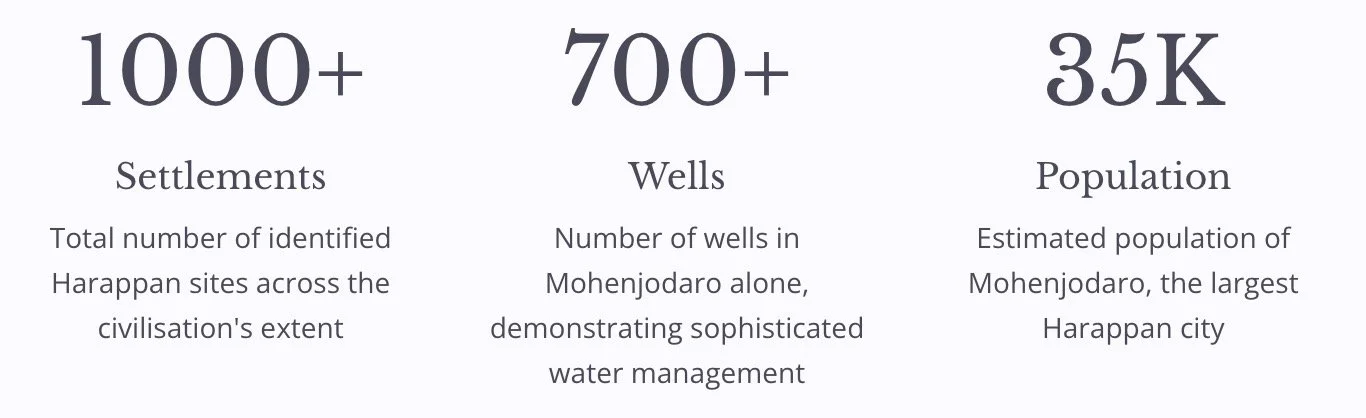
Geographical extent of indus valley Civilization
Late Harappan Phase: Transformation and Decline
Around 1900 BCE, signs of gradual decline emerged across the Indus Valley civilisation, and by approximately 1700 BCE, most cities had been abandoned. Recent examination of human skeletons from Harappa has revealed that the civilisation's end saw increased inter-personal violence and rising infectious diseases including leprosy and tuberculosis, suggesting social stress and deteriorating living conditions. According to historian Upinder Singh, "the general picture presented by the late Harappan phase is one of a breakdown of urban networks and an expansion of rural ones," indicating a fundamental transformation in settlement patterns and social organisation rather than complete collapse.
During approximately 1900 to 1700 BCE, multiple regional cultures emerged within the former Indus civilisation area, each with distinctive characteristics. The Cemetery H culture appeared in Punjab, Haryana, and Western Uttar Pradesh, whilst the Jhukar culture developed in Sindh, and the Rangpur culture (characterised by Lustrous Red Ware pottery) emerged in Gujarat. Other Late Harappan sites include Pirak in Balochistan and Daimabad in Maharashtra. The largest Late Harappan sites—Kudwala in Cholistan, Bet Dwarka in Gujarat, and Daimabad in Maharashtra—can be considered urban, though they are smaller and fewer compared to Mature Harappan cities.
Settlement Changes
Shift from large urban centres to smaller, more dispersed rural settlements. The urban network that characterised the Mature Harappan phase fragmented into regional cultures with distinct material traditions.
Trade Transformation
General decrease in long-distance trade, though some sites like Bet Dwarka maintained contacts with the Persian Gulf region. The extensive trade networks that connected the Harappan world contracted significantly.
Agricultural Adaptation
Diversification of agricultural base with crop variety and advent of double-cropping. Rural settlement shifted towards the east and south, suggesting adaptation to changing environmental conditions.
Cultural Regionalisation
Emergence of distinct regional cultures with varying pottery styles and material traditions, replacing the remarkable cultural uniformity of the Mature Harappan phase.
Nomenclature Debates: What Shall We Call This Civilisation?
The naming of this ancient civilisation has generated considerable scholarly debate, reflecting broader questions about identity, geography, and historical interpretation. Various terms have been employed, each with its justifications and limitations, making the nomenclature question more complex than might initially appear.
Indus Valley Civilisation
The traditional name 'Indus Valley Civilisation' derives from the first discoveries along the Indus River and its tributaries. However, this term faces objection given the civilisation's vast geographical extent far beyond the Indus valley, encompassing regions that never drained into the Indus system.
Sindhu-Sarasvati Civilisation
Some scholars prefer 'Indus-Sarasvati' or 'Sindhu-Sarasvati' civilisation because numerous sites cluster along the Ghaggar-Hakra river, identified by some with the ancient Sarasvati mentioned in the Rig Veda. Yet this term faces similar geographical objections as 'Indus valley'.
Harappan Civilisation
The most widely accepted scholarly term is 'Harappan civilisation', following the archaeological convention of naming a culture after its first identified site. This nomenclature doesn't imply all sites are identical to Harappa or that culture originated there, but provides neutral, geographically non-restrictive terminology.
Possehl asserts the necessity of breaking the Harappan monolith into sub-regions, which he terms 'Domains', recognising internal diversity within the civilisation. When newspapers announce discoveries of new Harappan sites, identification relies on a checklist of archaeological features. Pottery serves as a crucial marker—typical Harappan pottery is red with black-painted designs, displaying specific forms and motifs. Other diagnostic traits include terracotta cakes (triangular or round pieces of unclear function), standardised brick ratios (1:2:4), and particular stone and copper artefact types. When this basic set of Harappan material traits appears associated at a site, it qualifies as Harappan. Jim Shaffer (1992) proposes alternative terminology, using 'Indus valley tradition' for the long series of human adaptations from neolithic-chalcolithic stages through Harappan decline, with 'regionalization era' for Early Harappan, 'integration era' for Mature Harappan, and 'localization era' for Late Harappan phases, emphasising cultural continuity and transformation rather than discrete periods.
The Harappan People: Appearance and Daily Life
What did the Harappan people look like? How did they dress, adorn themselves, and spend leisure time? Terracotta, stone, and bronze sculptures, alongside skeletal remains, help answer these questions. Human terracottas divide into female and male figurines, those of indeterminate sex, a few with both attributes, and occasional males in feminine dress. Going by figurines, Harappan women wore short skirts made of cotton or wool. Male figurines are usually bare-headed, though some wear turbans. Most males appear nude, making it difficult to determine typical clothing. Certain stone sculptures suggest dhoti-like lower garments and upper garments consisting of shawls or cloaks worn over the left shoulder and under the right arm. Both men and women used kilts and shirts. Cotton clothes featured decorative patterns, with one sculpture showing cloth with trefoil patterns in red.
Hairstyles varied considerably. Women wore hair in braids, rolled into buns at the back or side, arranged in separate locks or ringlets, and wrapped turban-like around heads. Fan-shaped headdresses may represent hair stretched over bamboo frames, at Harappa supplemented by flowers or flower-shaped ornaments. Such elaborate hairstyles could indicate distinguished women or deities. Men displayed various hairstyles—braids, buns, and loose hair. Most male figurines sport beards, from goatees to the combed, spread-out style of the 'priest-king'. Both sexes had long hair. Female figurines wear necklaces, chokers, hair ornaments, bangles, and belts. Beautiful jewellery has been found at many sites. Men used more ornaments than modern Indians, wearing rings, bracelets, and ornaments around necks and arms. Growing beards was fashionable, but moustaches were shaved. Both sexes wore bangles and necklaces, though men rarely wore multi-strand graduated bead necklaces.
Toys and Games
Terracotta toys including balls, rattles, whistles, carts with moveable parts, and animals on wheels. Spinning tops made of terracotta and shell, clay marbles, and miniature furniture suggest children's play activities.
Pet Animals
Numerous terracotta dog figurines, some with collars, suggest people kept dogs as pets. Some figurines have comic appearances, reflecting a sense of humour in Harappan society.
Social Structure and Occupational Diversity
The absence of deciphered written evidence presents major challenges in understanding Harappan social organisation, requiring careful inferences from archaeological data. The Harappan culture zone comprised both villagers and city folk, with society including diverse occupational groups: farmers, herders, hunter-gatherers, craftspeople, fisherfolk, merchants, sailors, rulers, administrative officials, ritual specialists, architects, carpenters, brick masons, well diggers, boat makers, sculptors, shopkeepers, sweepers, and garbage collectors. Some farmers may have lived in cities, tilling nearby fields. Terracotta net sinkers and arrow points at Mohenjodaro and Harappa suggest urban populations included hunters and fisher-folk.
Social differentiation levels may not have matched Mesopotamia and Egypt, but house size variations and jewellery hoards indicate wealth concentration and status differences. Affluent groups comprised rulers, landowners, and merchants. Class and rank differences based on occupation, wealth, and status certainly existed. However, claims that the caste system existed in Harappan society remain highly speculative without supporting evidence. Female figurines depicting women grinding or kneading at Nausharo, Harappa, and Mohenjodaro suggest women's association with food-processing activities. Some fat female terracottas may represent pregnant women. Harappa burials include a woman with baby, perhaps death in childbirth. Some figurines show women carrying suckling infants on left hips or holding infants close to breasts. An unusual Nausharo figurine shows a male with feminine headdress holding an infant, suggesting some gender role flexibility.
35% Urban Population
Estimated proportion of total Harappan population living in cities versus villages
70% Agricultural Base
Approximate percentage of economy dependent on farming and herding activities
Kenneth A.R. Kennedy's skeletal studies show biological heterogeneity between regions, with similarity to present-day populations. Harappans of Punjab resembled modern Punjabis in appearance, whilst Sindh Harappans resembled modern Sindh inhabitants. Kennedy also identified malaria incidence amongst Harappans, suggesting disease challenges faced by these ancient populations.
Food Habits and Dietary Patterns
Harappan dietary patterns varied by region, reflecting local agricultural capabilities and environmental conditions. Sind and Punjab Harappans consumed wheat and barley as staple foods, whilst Rajasthan town dwellers relied primarily on barley. Gujarat Harappans at sites like Rangpur and Surkotdla preferred rice and millet, demonstrating regional dietary diversity. They obtained fat and oil from sesame seeds, mustard, and possibly ghee, whilst honey likely sweetened foods. Jujube and date seeds found at Harappan sites indicate fruit consumption preferences. They probably also ate bananas, pomegranates, melons, lemons, figs, and mangoes, alongside various wild nuts and fruits. Pea consumption is also evidenced.
Grains and Cereals
Wheat and barley (Punjab and Sind)
Barley (Rajasthan)
Rice and millet (Gujarat)
Oils and Fats
Sesame seed oil
Mustard oil
Ghee (possibly)
Honey for sweetening
Fruits and Vegetables
Jujube and dates
Bananas, pomegranates, melons
Lemons, figs, mangoes
Peas and various wild nuts
Animal Products
Deer, sheep, and goat meat
Fish (freshwater and marine)
Milk and curd
Note: No tea or potatoes in this period
Beyond plant foods, Harappans relished non-vegetarian fare. Deer, bear, sheep, and goat bones frequently appear in settlements. Fish, milk, and curd were also consumed. However, they had neither tea nor potato-chips—modern staples absent from their diet. The diversity of food sources suggests a well-balanced diet that supported large urban populations, though nutritional quality likely varied significantly between social classes.
Evidence of Warfare and Conflict
Did Harappans engage in warfare? Archaeological evidence suggests they did, though perhaps not as extensively as some contemporary civilisations. One significant indicator comes from Early Harappan sites like Kot Diji and Kalibangan, which were burnt down during the transition to the Mature Harappan phase. Whilst accidental fires could destroy large towns, the pattern of destruction at multiple sites suggests deliberate burning by victorious groups. The discovery of skeletons lying scattered in Mohenjodaro streets provides another telling indicator. Human societies from time immemorial have disposed of their dead in ordered fashion—it's unnatural that Harappans would leave their dead rotting in streets. This extraordinary situation indicates conflict so severe that normal burial practices couldn't be maintained, suggesting a catastrophic event where survivors lacked opportunity to bury their dead properly.
Citadels and fortifications around many Harappan towns indicate protection needs against outsiders. Some protection walls may have been flood bunds, but given Harappan townships' opulence contrasting with surrounding rural communities, fortifications likely protected wealth and life from external threats. Some copper and bronze weapons have been reported, though in smaller quantities than contemporary Mesopotamian sites, suggesting warfare may have been less central to Harappan society than to some contemporaries. The presence of defensive architecture combined with evidence of violent destruction at certain sites paints a picture of a society that, whilst primarily focused on trade and urban development, recognised the need for defensive capabilities and occasionally faced violent conflicts.
Site Destructions
Early Harappan sites like Kot Diji and Kalibangan show evidence of deliberate burning
Unburied Dead
Scattered skeletons in Mohenjodaro streets suggest catastrophic conflict preventing proper burial
Fortifications
Citadels and city walls indicate need for protection, though some may have been flood defences
Bronze Weapons
Copper and bronze weapons found, though fewer than in contemporary Mesopotamian sites
Arts and Crafts: Technological Sophistication
In pre-modern societies, separating arts and crafts proves difficult, as aesthetic and utilitarian functions intertwined. Groups of potters, copper and bronze workers, stone workers, house builders, brick makers, and seal-cutters lived in Harappan towns. Earlier writings contrasted Harappan artefacts' plainness with Egyptian and Mesopotamian opulence. Nowadays, scholars recognise the technological sophistication and beauty of Harappan artefacts. There's great variety in standardised, mass-produced craft items at Harappan sites. Whilst some sites specialised in producing single or few items, others like Harappa manufactured wide-ranging goods. Craft activity was often localised in settlement sections.
Various sculptures, seals, pottery, gold jewellery, and anatomically detailed figurines in terracotta, bronze, and steatite have been found at excavation sites. Striking about craft production's wide distribution is that manufacture often depended on non-local raw materials. At Mohenjodaro, shell artefacts were manufactured from marine molluscs found along Sind and Baluchistan coasts. Similarly, copper-based craft item manufacture evidence exists at Harappa—furnaces, slag, unfinished objects—though the city occupied a minerally poor area. Another striking feature is that Indus craft traditions aren't region-specific. Shell objects were manufactured at Nagwada and Nageshwar in Gujarat and at Chanhundaro and Mohenjodaro in Sind. Metal artefacts were produced at Lothal in Gujarat, Harappa in Punjab, and Allahadino and Mohenjodaro in Sind.
Arts and Crafts of Indus Valley civilization
Some crafted objects are quintessentially Indus, neither found before urban civilisation's advent nor after its collapse. Indus seals, for example, are rarely found in Late Harappan and post-Harappan contexts. Whilst craft objects were manufactured at many places, manufacturing technology could be surprisingly standardised. In shell bangles' case, at practically all sites they had uniform width and were almost everywhere sawn by saws with blade thickness between 0.4mm and 0.6mm. The Harappan crafts display impressive standardisation levels. Kenoyer suggests state control may have been responsible for high standardisation in crafts considered valuable for maintaining socioeconomic or ritual order, using non-local raw materials and highly complex technologies (e.g., seal-making, stoneware bangles, stone weights).
Pottery and Ceramic Traditions
Harappan pottery reflects efficient mass-production capabilities. Pottery kilns were found at Mohenjodaro, Harappa, Nausharo, and Chanhudaro. Pots were fired in funnel-shaped up-draft closed kilns, though open-firing kilns may also have been used. Pottery represents blending of Baluchistan ceramic traditions with cultures east of the Indus system. Great variety exists, including black-on-red, grey, buff, and black-and-red wares. Most pots were wheel-turned, with both fine and coarse fabrics occurring in varying thicknesses. At Mohenjodaro's earliest levels, burnished grey ware with dark purplish slip and vitreous glaze may represent one of the world's earliest glazing examples.
Most Harappan pottery is plain, but substantial portions are painted, treated with bright red slip and black painted decoration. Red colour for slip was made from red ochre (iron oxide, known as geru), whilst black combined dark reddish-brown iron oxide with black manganese. Polychrome pottery is rare, mainly comprising small vases decorated with geometric patterns mostly in red, black, and green, less frequently in white and yellow. Examples of multi-coloured pottery appear in Mehrgarh. Pottery is decorated with geometric patterns, fish, birds, cows, antelopes, scorpions, fantastic beasts, and griffins.
Decorative Motifs
Horizontal lines, leaf patterns, scales, chequers, lattice work, palm and pipal trees. Geometric patterns, circles, squares, triangles, and animal figures including humped bulls, pumas, birds, snakes, and fish.
Distinctive Shapes
Dish-on-stand, vase with s-profile, vessels with knobbed decoration, large slender-footed bowls, cylindrical perforated jars, and goblets with pointed feet.
Functional Types
Large jars for grain or water storage, elaborately painted ceremonial pots, small drinking vessels, shallow food bowls, flattish plate dishes, and various-sized cooking pots with strong projecting rims.
Bulls and pumas symbolised abundance, fecundity, and power, sometimes depicted facing trees in scenes interpretable as receiving life from sacred trees. Tree patterns were favourite motifs. A Lothal jar depicts two birds perched on a tree, each holding a fish in its beak. Human figures are rare and crude. Some designs such as fish scales, palm and pipal leaves, and intersecting circles have roots in the Early Harappan phase. In areas like Gujarat and Rajasthan, other pottery varieties continued alongside Harappan pottery. Although certain uniformity exists in pottery styles and techniques across the Harappan culture zone, regional differences also appear.
Sculpture, Metalwork, and Ornaments
Apart from utilitarian stone and metal items, a few pieces of fine sculpture have been found at Harappan sites. Most are small but display excellent artistic skills and sensibilities. The stone bust (17.78 cm high) of a male figure found at Mohenjodaro, labelled the 'priest-king', shows a bearded face with shaved upper lip. Half-closed eyes might indicate meditation states. Across the left shoulder is a cloak carved in relief with trefoil pattern. Two fine stone torsos of a male figure (about 10 cm high) were found at Harappa, with refined, wonderfully realistic modelling of fleshy parts. A seated stone ibex or ram (49 × 27 × 21 cm) at Mohenjodaro and a stone lizard at Dholavira demonstrate animal sculpture. The only large sculpture piece is a broken, seated male figure from Dholavira.
Two bronze female figurines were found at Mohenjodaro. One became famous as the 'dancing girl', standing 10.8 cm high and made by the lost-wax method still used in certain Indian parts. With head drawn backwards, drooping eyes, right arm on hip and left arm hanging down, the figure is in a dancing stance. She wears numerous bangles, and her hair is plaited elaborately. It's considered a Harappan art masterpiece. Bronze figurines of buffalo and ram beautifully capture animal stances. Two little bronze toy carts, discovered at Harappa and Chanhudaro, are identical in design despite their locations. However, Harappans don't seem to have used stone or bronze for artistic creations on large scales—such findings are rare.
Priest-King
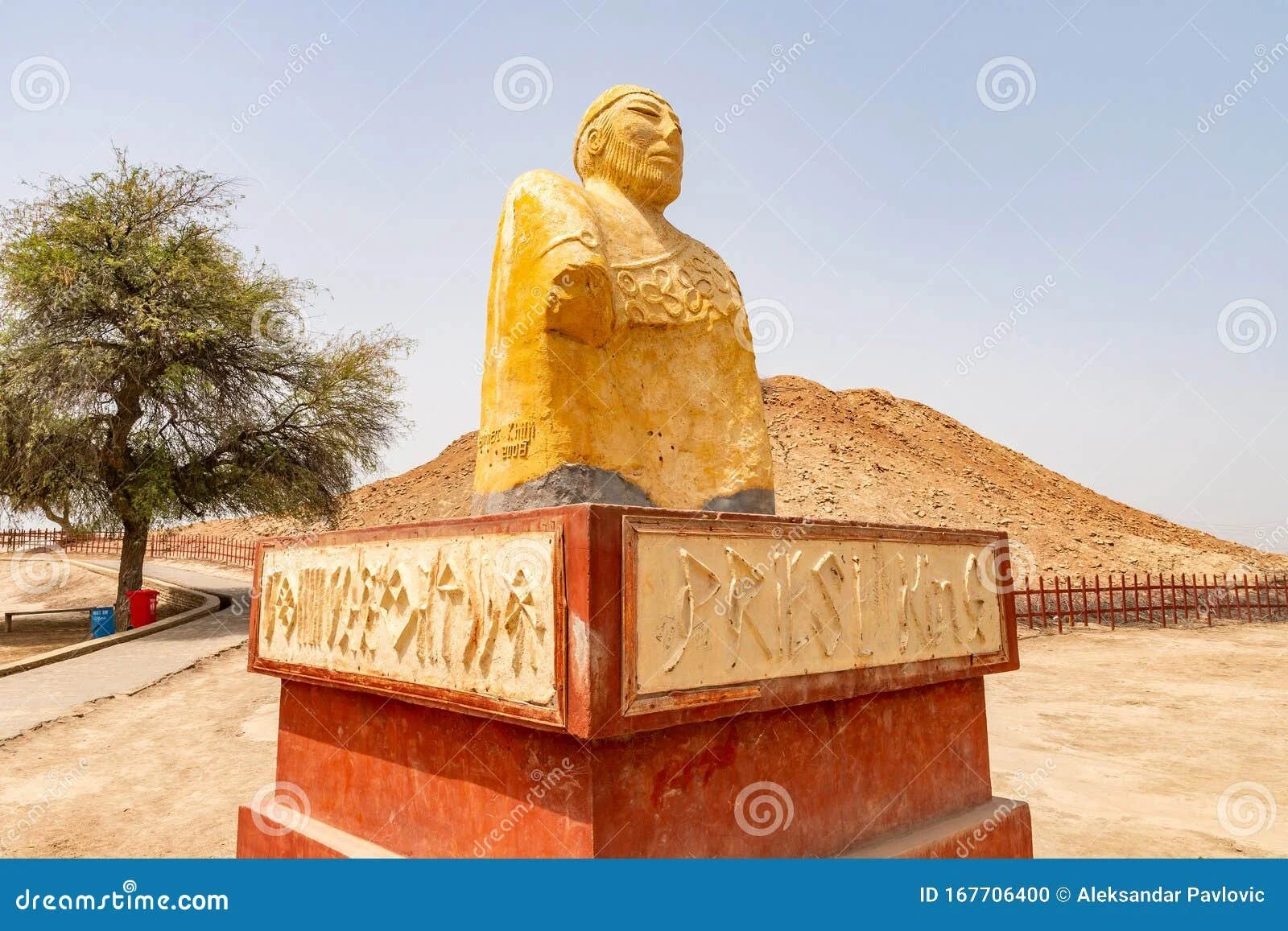
17.78 cm stone bust with trefoil pattern cloak, representing possible religious or political authority
Dancing Girl
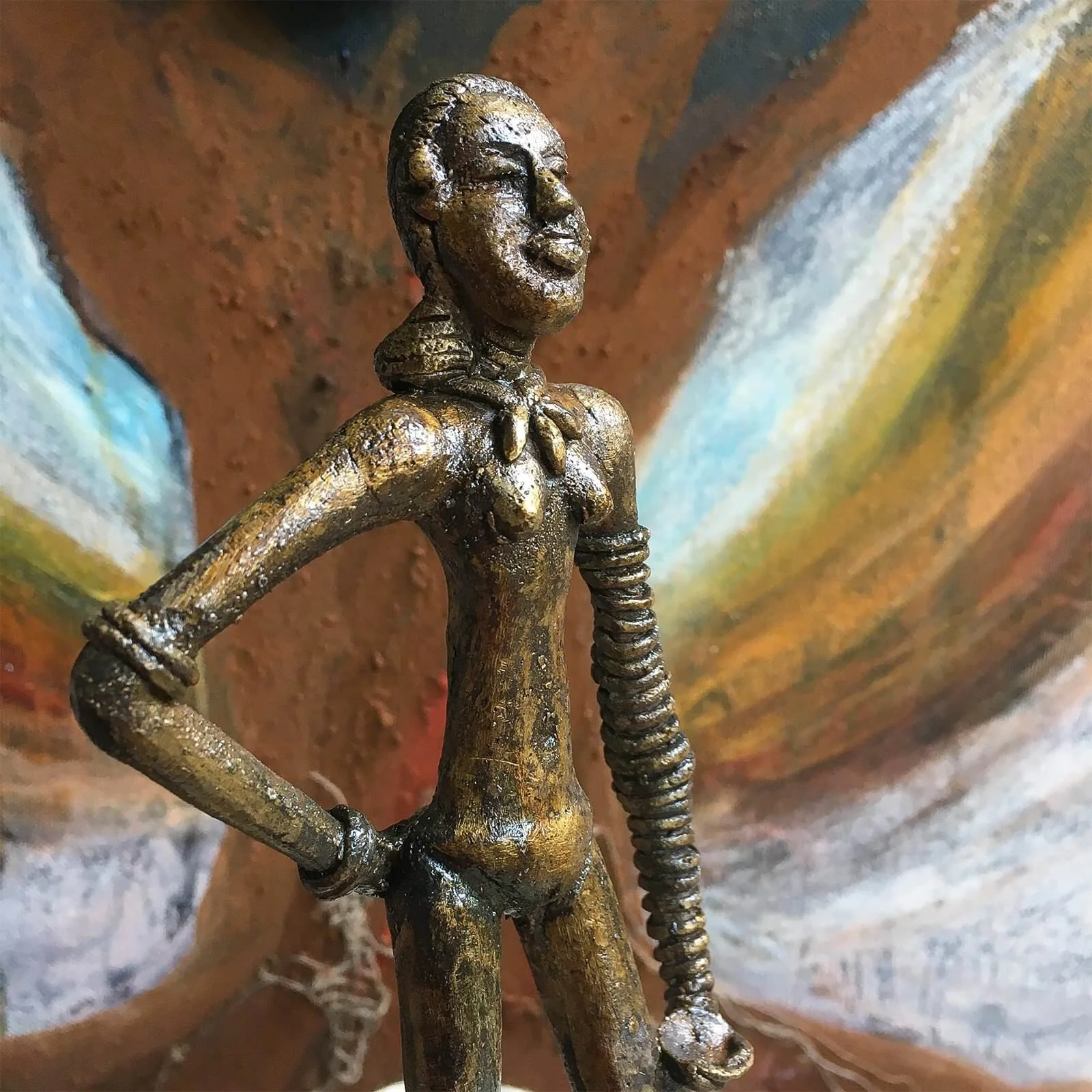
10.8 cm bronze figurine made by lost-wax method, showing elaborate bangles and hairstyle
Gold Jewellery
Beautifully worked gold, silver, and semi-precious stone jewellery including necklaces, bracelets, and earrings
Harappans evolved new metallurgy techniques, producing copper, bronze, lead, and tin. The civilisation is marked by numerous copper objects. Besides making pure copper artefacts, Harappan craftspersons alloyed copper with arsenic, tin, or nickel. Copper and bronze artefacts included vessels, spears, knives, short swords, arrowheads, axes, fishhooks, needles, mirrors, rings, and bangles. Pure copper artefacts far outnumbered alloyed bronze ones. Usually, tools like knives, axes, and chisels, needing hardened edges, were alloyed. Beautifully worked gold and silver jewellery including necklaces, bracelets, brooches, pendants, and earrings have been found. A jewellery hoard made of gold, silver, and semi-precious stones was found at the small village site of Allahdino, whilst Mohenjodaro yielded a hoard of gold beads, fillets, and other ornaments.
Seals, Beads, and Specialised Crafts
Seal making was another important Harappan craft. More than 2000 seals have been found from Harappan settlements. Most seals are square or rectangular, averaging about 2.54 cm, though larger ones exceed 6.35 cm. Some have perforated bosses at the back for handling and suspension. A few cylindrical and round seals also exist. Most seals are made of steatite, but there are a few silver, faience, and calcite ones. Two fine silver seals with unicorn motifs were discovered at Mohenjodaro, and some copper and soapstone ones at Lothal. To make stone seals, stone was sawed and shaped with knives, then carved using fine chisels and drills. Seals were coated with alkali and heated, giving them white lustrous surfaces.
Seal designs include a wide range of animals associated with semi-pictographic script sign groups. Motifs include elephants, tigers, antelopes, crocodiles, hares, humped bulls, buffalo, rhinoceros, and the one-horned mythical unicorn. Small feeding troughs or stands often appear before animals. Composite animals and plants also appear. One recurrent composite representation shows a face of a man with elephant trunk and tusks, bull horns, ram fore-part, and tiger hind-quarters. These seals might have served religious purposes. Some seals have only scripts carved, whilst others bear human and semi-human forms. The seal of a horned deity sitting in yoga posture surrounded by animals has been identified with god Pashupati. Some seals show various geometric patterns. Most seals have short inscriptions. Some rectangular seals have writing but no motifs. Seals could have facilitated goods exchange between distant cities.
Bead Making
Harappans used remarkably beautiful beads made of agate, turquoise, carnelian, and steatite. Bead-making factories with tools, furnaces, and beads in various preparation stages have been found at Chanhudaro and Lothal. The long barrel cylinder carnelian beads were so valued they reached Mesopotamian royal burials.
Shell Working
Beads, bracelets, and decorative inlay work of shell show skilled craftspersons. Bangles were often made from conch shell. Chanhudaro and Balakot were important shell work centres. Nageshwar in Gujarat specialised exclusively in shell-working, particularly making bangles.
Textile Production
Harappans made cotton and woollen textiles. Terracotta figurines wearing clothes reflect garment types. Mesopotamian texts mention cotton as Meluhha imports. Cotton cloth traces were found at Mohenjodaro, preserved by contact with corroding silver. Recent Harappa excavations gave evidence of woven textile impressions on faience vessels.
Urban Planning and Architectural Marvels
The Indus Valley Civilisation is renowned for its sophisticated urban architecture and town planning, representing some of India's earliest large buildings. Harappa and Mohenjodaro—the two major sites—are among the earliest and finest examples of urban civic planning. Most sites were divided into two parts: the citadel, smaller and higher (standing 40-50 feet above), situated on the western side; and the lower town, occupying much larger area but on a lower plain, situated on the eastern side and divided into wards like a chessboard. Cities had parallelogramic form laid out in regular grid patterns, with roads running north-south and east-west, cutting each other at right angles.
Large-scale use of burnt bricks of standard dimensions (4:2:1 ratio) for construction marked a difference from stone buildings. These bricks were coated with plaster and made water-tight with natural tar or gypsum. In houses, kutcha bricks were used, whilst in bathrooms and drains, pucca waterproofed bricks were used. The cities comprised well-planned architectural features including underground drainage with inspection holes—the most striking civilisation feature. Small drains ran from each house, connecting to drains along main roads. Inspection holes, where top covers were loosely attached, allowed regular cleaning and maintenance. Cesspits were placed at regular intervals. The importance placed on hygiene—both personal and public—is impressive.
Great Bath
Found at Mohenjodaro, this ingenious hydraulic system pool (12m × 7m × 3m deep) was accessed by flights of steps at either end. The pool was fed by a well nearby, with dirty water drained into the city's sewage system through a large corbelled drain. Probably used for ritual bathing.
Granaries
Designed with strategic air ducts and raised platforms, demonstrating intelligent construction. The largest building in Mohenjodaro was a granary. Harappa had six granaries or storehouses. Large granaries suggest state storage of grain for ceremonial purposes and possibly regulation of production and sale.
Fortifications
Cities were surrounded by massive walls and gateways, possibly built to control trade, prevent military invasion, and stop flooding. Each city part was made of walled sections including public buildings, houses, markets, and craft workshops. At Kalibangan, both citadel and lower city were surrounded by walls.
Drainage Systems
Efficient and well-planned drainage is a notable feature. Even smaller towns and villages had impressive systems. Drains for collecting rainwater were separate from sewage chutes and pipes. Main drains were covered by corbelled arches made of brick or stone slabs with rectangular soakpits at regular intervals.
Legacy and Significance: A Civilisation Remembered
The Indus Valley Civilisation stands as a testament to human ingenuity, urban planning, and cultural sophistication in the Bronze Age. Its legacy extends far beyond the physical remains of cities and artefacts, influencing subsequent South Asian cultures and demonstrating that sophisticated urban civilisation emerged independently on the Indian subcontinent. The civilisation's remarkable achievements in standardised measurements, sophisticated drainage systems, and craft production showcase a level of organisation and technological capability that rivals or exceeds contemporary civilisations in Egypt and Mesopotamia. The peaceful nature of Harappan society, suggested by limited military architecture and weapons compared to contemporaries, presents an alternative model of urban development based more on trade and cooperation than conquest and warfare.
The civilisation's influence can be traced in various aspects of later Indian culture. Some make-up and toiletry items found in Harappan contexts have similar counterparts in modern India. The emphasis on ritual bathing, evident in the Great Bath and numerous wells, foreshadows later Hindu religious practices. The 'Pashupati' seal suggests proto-Shiva worship, indicating religious continuity spanning millennia. Urban planning principles developed by the Harappans, particularly the grid pattern and sophisticated water management, influenced subsequent Indian urban development. The civilisation's craft traditions, especially in bead-making, metalwork, and textile production, established technical foundations that continued through Indian history.
Urban Innovation
Technological Achievement
Cultural Sophistication
Trade Networks
Enduring Legacy
Perhaps most importantly, the Indus Valley Civilisation demonstrates that complex urban societies can develop indigenous roots through gradual cultural evolution rather than external imposition. The transformation from Early Harappan village cultures to the magnificent cities of the Mature Harappan phase illustrates human societies' capacity for innovation and adaptation. Though the civilisation declined around 1900 BCE, with cities abandoned and urban networks breaking down, its cultural achievements were not lost. Regional cultures that emerged during the Late Harappan phase carried forward various traditions, ensuring cultural continuity despite urban decline. Today, the Indus Valley Civilisation inspires archaeologists, historians, and the general public, reminding us of humanity's ancient capacity for creating sophisticated, well-organised societies that balanced technological advancement with quality of life—a lesson as relevant today as it was four thousand years ago in the fertile plains of the Indus and Ghaggar-Hakra rivers.
